Moral Test Action Plan: 30 Days to Ethical Self-Improvement
You’ve taken a major step in self-discovery. You answered challenging questions, explored complex scenarios, and received a snapshot of your unique ethical profile. But now you might be asking yourself the most important question of all: "What do I do with this knowledge?"
It's one thing to gain insight into your ethical compass; it's another to use that insight to navigate your life with greater purpose and integrity. Knowing your values is one thing. Living them? That gap can feel vast. This is where an actionable plan makes all the difference.
This guide is your personal roadmap. We will turn the valuable data from your Moral Test results into a practical, 30-day plan for ethical self-improvement. Your journey to a more intentional life begins with understanding your personal baseline, which you can discover with the free Moral Test.

Decoding Your Moral Test Results for Growth
Before you can build, you need to understand your foundation. Your Moral Test report isn't a final judgment; it's a starting point. It's a mirror reflecting your current ethical inclinations, shaped by your experiences, beliefs, and reasoning. The first step in any meaningful moral growth plan is to carefully analyze what this reflection is showing you.
Pinpointing Your Core Values and Ethical Strengths
The most empowering part of your results is the affirmation of your strengths. Perhaps you scored highly in Fairness, showing a deep commitment to justice and equality. Or maybe your results highlighted a strong sense of Loyalty, demonstrating your dedication to your community and relationships.
Take a moment to truly acknowledge these strengths. These are not just abstract concepts; they are the pillars of your character.
- Review Your Report: Look at the areas where you scored highest. Do these resonate with how you see yourself?
- Connect to Your Life: Think of specific times you acted in alignment with these strengths. How did it feel?
- Embrace Your Core: Write down your top 2-3 ethical strengths. These are the values you can lean on as you navigate challenges.
Understanding and appreciating your ethical core is the foundation of self-improvement. It reminds you that growth isn't about fixing flaws, but about building upon a solid base of what you already do well.
Identifying Areas for Ethical Development and Values Implementation
Your results may also highlight areas where your ethical reasoning is less developed or where your values might conflict. For example, a strong sense of Loyalty might sometimes clash with a commitment to Fairness. This is not a failure; it’s a normal part of being human. Recognizing these tensions shows deep self-awareness.
This part of your report offers a powerful opportunity for growth.
- Look for Lower Scores: Note the ethical principles where your score was lower. Instead of seeing these as weaknesses, view them as areas ripe for development.
- Identify Value Conflicts: Does your commitment to one value sometimes make it hard to honor another? For example, does your dedication to Care make it difficult to make tough but necessary decisions?
- Set an Intention: Choose one or two areas for gentle focus. The goal isn't to become a different person, but to become a more balanced and intentional version of yourself.
This process of decoding is crucial for an effective values implementation guide. It ensures your action plan is personal, relevant, and focused on what truly matters to you.

Crafting Your 30-Day Ethical Action Steps
With a clear understanding of your strengths and growth areas, it's time to create a concrete plan. The next 30 days are about building small, consistent habits that reinforce your desired ethical behavior. This is where insight transforms into action.
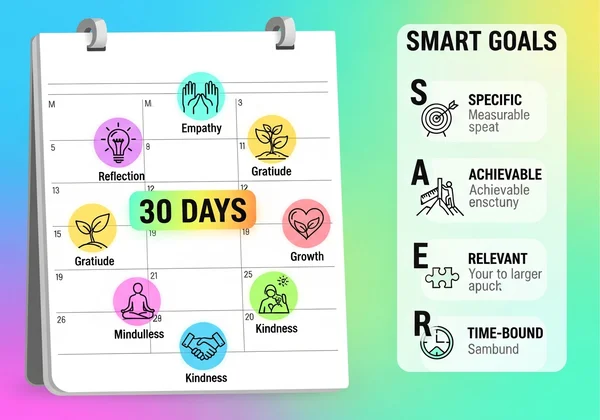
Setting SMART Goals for Moral Self-Improvement
Vague goals like "be more honest" or "be kinder" are hard to track and achieve. Instead, we can use the SMART framework to set clear, effective goals for moral self-improvement. SMART stands for Specific, Measurable, Achievable, Relevant, and Time-bound.
Let's say you want to work on developing your sense of Fairness. Here’s how you could turn that into a SMART goal:
- Specific: "I will actively seek out and listen to a viewpoint different from my own during team meetings, without interrupting."
- Measurable: "I will do this at least twice per week."
- Achievable: This is a realistic action you can integrate into your existing work routine.
- Relevant: This directly relates to your goal of enhancing your appreciation for Fairness and different perspectives.
- Time-bound: "I will practice this for the next 30 days."
Take your chosen area for development and create 1-2 SMART goals for the month. This clarity will be your guide and make your progress tangible. If you're not sure where to start, you can always revisit your insights by taking the online morality test.
Daily Practices to Strengthen Your Moral Compass
Lasting change is built through small, daily actions. Think of these as workouts for your ethical muscles. Integrating simple practices into your routine can make a huge impact over 30 days.
Here are some ideas for your ethical action steps:
- The Morning Minute: Start each day by spending 60 seconds reflecting on one of your core values. Ask yourself: "How can I express this value today?"
- The Empathy Exercise: Once a day, make a conscious effort to see a situation from someone else's perspective, especially someone you disagree with.
- The Gratitude Pause: Before a meal, take a moment to think of someone who has acted with integrity and how it impacted you. This reinforces the positive power of ethical behavior.
- The "Pause Before Posting" Rule: In online discussions, take a five-second pause before you post a comment. Ask yourself: "Is this helpful? Is this kind? Is this necessary?"
Choose one or two of these practices to incorporate into your daily life. Consistency is more important than intensity.
Sustaining Your Journey of Moral Growth
A 30-day plan is a fantastic start, but true ethical development is a lifelong journey. The final step is to build systems that support your continued growth long after the initial month is over. This is how you ensure your progress sticks.
Reflective Journaling and Ethical Scenario Practice
Self-reflection is the engine of moral growth. A simple journaling practice can help you process experiences, learn from mistakes, and reinforce your commitments. You don't need to write pages; just a few minutes each evening can be incredibly powerful.
Consider these journaling prompts:
- When did I face a small ethical choice today? How did I handle it?
- Did my actions today align with my core values?
- What situation made me feel morally conflicted or uncertain? Why?
Another powerful tool is scenario practice. Think about a potential ethical dilemma you might face at work or in your personal life. Consider it from the perspective of different moral values highlighted in your test results. This mental rehearsal prepares you to act with greater clarity and courage when a real situation arises.
Expert Tip: Ethicist Dr. Lena Reyes recommends pairing journaling with weekly reviews. "Dedicating 15 minutes every Sunday to read your week's entries," she notes, "helps you spot patterns and celebrate small wins, which is crucial for long-term motivation."
Overcoming Obstacles and Building Ethical Resilience
The path of self-improvement is never a straight line. You will face setbacks. You might act out of alignment with your values, face social pressure to compromise, or simply feel tired. This is normal. The key is not to avoid obstacles, but to build ethical resilience.
- Practice Self-Compassion: If you make a mistake, don't beat yourself up. Acknowledge it, learn from it, and recommit to your goals. Shame shuts down growth; compassion fuels it.
- Find an Accountability Partner: Share your goals with a trusted friend or mentor. Knowing someone else is aware of your journey can provide motivation and support.
- Revisit Your "Why": When you feel your motivation waning, go back to your Moral Test results and your initial reflections. Remind yourself why this journey is important to you.
Resilience keeps a single setback from derailing your progress. It’s about progress, not perfection.
Monthly Check-Ins for Lasting Change
To make your growth stick, create a simple monthly check-in. At the end of each month, ask yourself two questions: "What went well?" and "What could I do differently next month?" This quick review keeps your goals top of mind and allows you to adjust your plan as you evolve. It turns a one-time effort into a sustainable habit of ethical self-awareness.

Your Ethical Evolution Starts Today
Ready to put your insights into practice? Remember: small steps today lead to lasting ethical growth. You've learned how to decode your ethical profile, create a practical 30-day plan, and build systems for long-term progress.
Your ethical evolution is a journey, and you now have a clear map for the first leg of that adventure. The most important thing you can do now is begin.
Ready to test your moral compass? Discover your ethical profile now.
Frequently Asked Questions About Ethical Self-Improvement
How do I identify my values after taking the Moral Test?
Your results reveal how strongly you prioritize ethics like fairness, loyalty, and care. Which ones resonate most with you? To find your core values, look at the principles where you scored highest. Ask yourself if these feel true to your identity. The test is the first step in a process of guided self-reflection that our platform supports.
What are common ethical action steps for personal growth?
Looking for concrete ideas? Common action steps involve turning abstract values into daily behaviors. For instance, to cultivate "Care," you could volunteer for an hour a week. To enhance "Fairness," you could practice active listening with people who hold different opinions. The key is to make the steps small, consistent, and directly related to the value you want to strengthen.
How can I sustain my moral self-improvement over time?
Keep your momentum going with these three proven tactics:
- Weekly Reflection: Journal for 5–10 minutes each Friday to review your progress, challenges, and moments of pride.
- Accountability: Share your goals with a trusted friend. A simple check-in can make a world of difference.
- Revisit Your Foundation: Periodically retaking a moral assessment test can show you how you've grown and reveal new areas for focus, keeping your journey fresh and relevant.
Is empathy a core value, and how does it relate to ethical action?
While not always listed as a formal ethical principle, empathy is the engine behind values like "Care" and "Fairness." It's the ability to understand and share the feelings of another. Without it, our values remain theoretical. Practicing empathy—by truly listening or trying to see another's perspective—is one of the most powerful ethical actions you can take.