Moral Test vs. MBTI: Uncovering Your Ethical Core
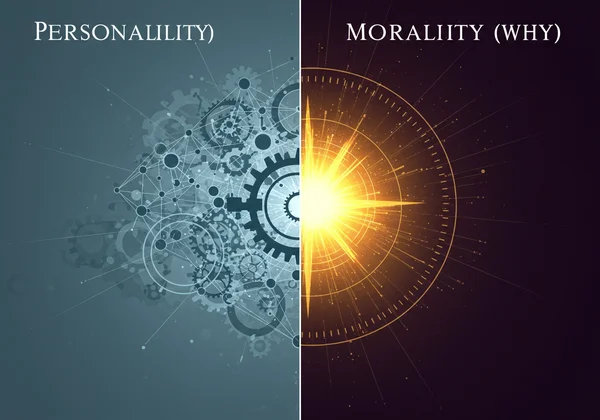
Are you fascinated by the world of self-discovery tests? Many of us have spent hours exploring our personalities through tools like the Myers-Briggs Type Indicator (MBTI) or the Big Five. These assessments are fantastic for shedding light on how we interact with the world. But have you ever wondered about the deeper "why" behind your choices? How do I figure out my morals and values? This is where a moral test offers a profoundly different and complementary perspective. While personality tests map your behavioral tendencies, a moral test delves into the very foundation of your decision-making—your ethical core.
This article explores the unique insights you gain when you look beyond personality types. We'll compare the popular MBTI with the kind of in-depth ethical assessment offered by our platform. By the end, you'll understand why knowing your ethical compass is a critical step in your journey of self-awareness. Ready to go beyond personality? You can start your free test anytime.
Decoding Personality: What MBTI & Big Five Reveal
For decades, personality tests have been the go-to tools for understanding ourselves and others. They provide a framework for our preferences, social styles, and behavioral patterns, making them incredibly useful for career planning, team building, and personal relationships. Let's briefly look at two of the most popular models.
Myers-Briggs Type Indicator: Measuring Preferences
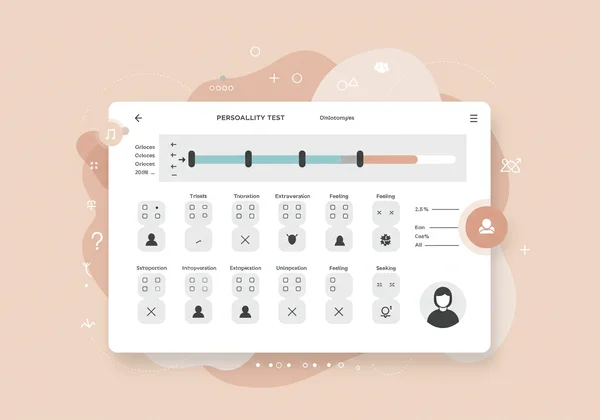
The MBTI is perhaps the most famous personality framework in the world. It sorts individuals into one of 16 personality types based on four dichotomies: Introversion (I) vs. Extraversion (E), Sensing (S) vs. Intuition (N), Thinking (T) vs. Feeling (F), and Judging (J) vs. Perceiving (P).
An MBTI result, like "INFJ" or "ESTP," tells you about your preferred ways of gaining energy, processing information, making decisions, and organizing your life. It reveals how you are likely to behave in certain situations. For example, a "Thinking" type may prioritize logic in decisions, while a "Feeling" type might focus on harmony and the impact on people. It's a powerful tool for understanding your natural inclinations.
The Big Five Personality Traits: Understanding Behavioral Tendencies
The Big Five model is another cornerstone of personality psychology, widely respected for its scientific validity. It assesses personality across five broad dimensions:
- Openness: How open are you to new experiences?
- Conscientiousness: How organized and dependable are you?
- Extraversion: How much energy do you draw from social interaction?
- Agreeableness: How cooperative and compassionate are you?
- Neuroticism: How prone are you to stress and emotional instability?
Unlike the MBTI's distinct "types," the Big Five places you on a spectrum for each trait. This model provides a nuanced snapshot of your temperament and behavioral patterns. It can predict job performance, relationship satisfaction, and even political leanings. However, like the MBTI, its focus remains on describing behavior and disposition.
Beyond Traits: What a Moral Compass Test Uncovers
If personality tests tell us the "how," a moral test uncovers the "why." A moral compass test isn't about whether you're introverted or extraverted; it’s about the fundamental principles that guide your sense of right and wrong. It illuminates the internal logic you use when faced with difficult choices, especially those with ethical weight.
This is the unique mission of this free moral test. The platform was designed to help you navigate the complex landscape of your own ethics, moving beyond surface-level behaviors to the very core of your values. Taking a free moral assessment can reveal the hidden architecture of your conscience.
Defining Your Ethical Foundations: Values and Principles
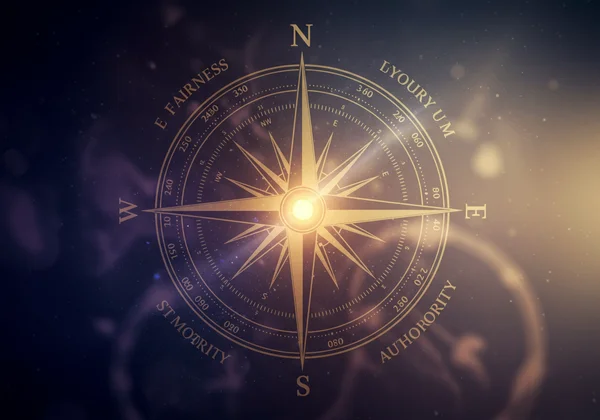
A moral test measures something deeper than behavioral preference. It explores your ethical foundations—the stable, underlying values that inform your judgments. Drawing from decades of research in moral psychology, such as Moral Foundations Theory, these tests analyze how you prioritize competing values like:
- Care vs. Harm: Your emphasis on compassion and protecting others.
- Fairness vs. Cheating: Your dedication to justice and equal rights.
- Loyalty vs. Betrayal: Your commitment to your group or community.
- Authority vs. Subversion: Your respect for tradition and legitimate leadership.
- Sanctity vs. Degradation: Your sense of purity, divinity, and disgust.
Understanding where you stand on these foundations helps you see why you react so strongly to certain issues while remaining neutral on others. It explains the "why" behind your gut feelings.
The Science Behind Moral Assessments
Trust is paramount when exploring something as personal as your morals. That's why the moral alignment test on this platform is not just a quiz; it’s a scientifically-grounded tool. Developed by a cross-disciplinary team of ethicists, psychologists, and AI experts, the test is built upon established ethical frameworks and psychological models.
The questions present you with thought-provoking scenarios that challenge your reasoning. The platform's AI-driven analysis then provides a detailed, personalized report that goes far beyond a simple score. It highlights your ethical strengths, potential blind spots, and offers actionable steps for personal growth. This commitment to a science-backed approach ensures the insights you receive are both reliable and deeply meaningful.
Moral Test vs. Personality: Key Differences in Self-Discovery
So, should you choose one over the other? Not at all. A moral test and a personality test are not competitors; they are partners in self-discovery, each providing a different piece of the puzzle. The key is understanding their distinct contributions to your self-awareness.
Intent vs. Action: Why Your Moral Values Matter More
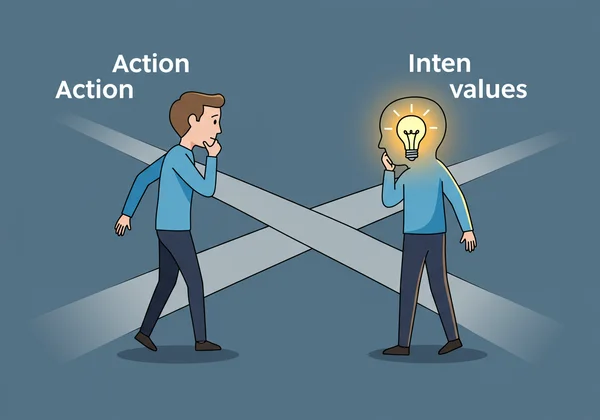
Here lies the most critical distinction. A personality test might predict how you are likely to act. An MBTI result might suggest an "F" (Feeling) type will avoid conflict in a team meeting. However, a moral test reveals your intent—the ethical reasoning that drives you internally.
Imagine a situation where your boss asks you to mislead a client.
- Your Personality (e.g., High Agreeableness) might make you want to say "yes" to avoid confrontation.
- Your Morals (e.g., High Fairness) would create intense internal conflict because you believe misleading someone is fundamentally wrong.
Your final action is a product of both, but your moral values define the internal struggle and your sense of integrity. Understanding this inner compass is essential because it is the source of your convictions and your guide when facing true ethical dilemmas. It’s what helps you decide who you want to be, not just how you tend to behave.
Actionable Insights for Ethical Growth and Decision-Making
While a personality type is largely descriptive, the results from a moral values test are designed to be formative. Knowing you are an "INTP" is insightful, but what do you do with that information? In contrast, discovering you have a strong inclination toward Loyalty but a weaker one toward Fairness provides a clear path for development.
The personalized AI-powered insights from the Moral Test are designed for exactly this purpose. The report doesn't just label you; it gives you a roadmap. It helps you understand:
- How your unique moral profile influences your relationships and career choices.
- Where your ethical blind spots might lie.
- How to make more conscious, value-aligned decisions in your daily life.
This focus on actionable growth is what makes exploring your ethical core such a transformative experience.
Find Your Ethical Core: Your Journey Beyond Personality
Understanding your personality is a fantastic starting point for self-discovery. Tools like MBTI and the Big Five give us a language to describe our behaviors and preferences. But to truly know yourself, you must also understand the "why" that powers your decisions—your ethical engine.
A moral test offers a unique window into your soul, revealing the foundational values that shape your worldview. It complements personality assessments by adding a layer of depth that is crucial for authentic living and meaningful personal growth.
Are you ready to discover the principles that define you? Your journey into your ethical core awaits. Take the free Moral Test today and uncover the values that make you who you are.
Frequently Asked Questions About Moral Tests
What is a basic moral test, and how does it work?
A basic moral test is a self-assessment tool designed to help you identify your core ethical values and principles. It typically works by presenting you with a series of situational dilemmas or questions that require you to make a choice based on your sense of right and wrong. Our algorithm analyzes your responses based on established moral frameworks to generate a personalized profile of your ethical tendencies.
How do I identify my moral values and principles?
Identifying your moral values involves introspection and self-reflection. A structured tool like an ethical compass test is one of the most effective methods. It prompts you to think about complex situations, forcing you to confront your priorities. Afterward, reflecting on your results helps crystallize which principles—like honesty, compassion, or justice—are most important to you.
What are the primary differences between a moral test and a personality test?
The primary difference is focus. A personality test (like MBTI) describes your behavioral patterns and preferences—how you tend to act. A moral test explores your ethical framework—why you believe certain actions are right or wrong. Personality is about disposition; morality is about conviction.
Can a moral test help me understand if someone is moral?
A moral test is not a tool for judging others. Its purpose is to foster self-awareness, not to label someone as "good" or "bad." It reveals an individual's unique hierarchy of values. Everyone has a different moral compass, and a tool like the Moral Test helps each person understand their own, promoting empathy and better communication rather than judgment.