How Culture Shapes Moral Values: Understanding Global Differences
Have you ever wondered why people from different parts of the world view "right" and "wrong" so differently? You might find yourself in a meeting with international colleagues or traveling abroad. Suddenly, you realize that your ethical compass points in a different direction than theirs. Is our morality something we are born with, or is it a product of our environment?
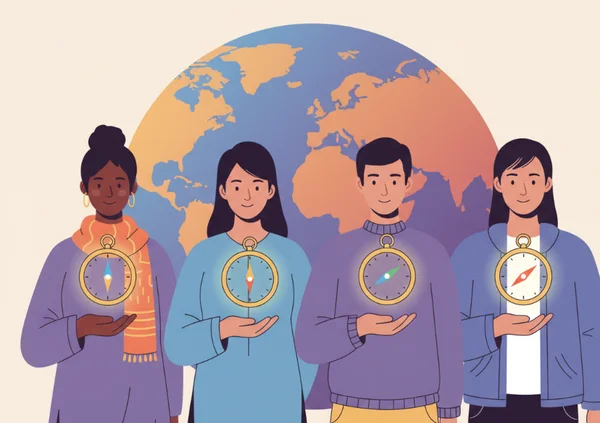
Understanding how culture shapes our decisions is more than just an academic exercise. It is a vital tool for personal growth. It also ensures successful communication in our connected world. If you want to dive deeper into your own beliefs, you can start your test right now to see where you stand. This article will explore the fascinating link between society and conscience. We will help you navigate the complex landscape of global ethics.
Cross-Cultural Ethics: How Societies Define Right and Wrong
To understand why moralities differ, we must first look at the scientific frameworks that define human values. Ethics is not just a collection of random rules. Instead, it is built on a foundation of psychological needs and social requirements. These vary significantly from one region to another.
Understanding Moral Foundation Theory Across Borders
One of the most respected models in this field is Moral Foundation Theory (MFT). Developed by social psychologists, this theory suggests that human morality is like a "tongue with six taste receptors." Just as some cultures prefer spicy food while others like sweet, different societies prioritize different moral "flavors."
The six pillars of this theory are:
-
Care vs. Harm: Protecting others and being kind.
-
Fairness vs. Cheating: Justice, rights, and autonomy.
-
Liberty vs. Oppression: The urge to resist restricted freedom.
-
Loyalty vs. Betrayal: Standing with your group or nation.
-
Authority vs. Subversion: Respecting traditions and legitimate leadership.
-
Sanctity vs. Degradation: Seeking purity and avoiding "disgusting" behaviors.
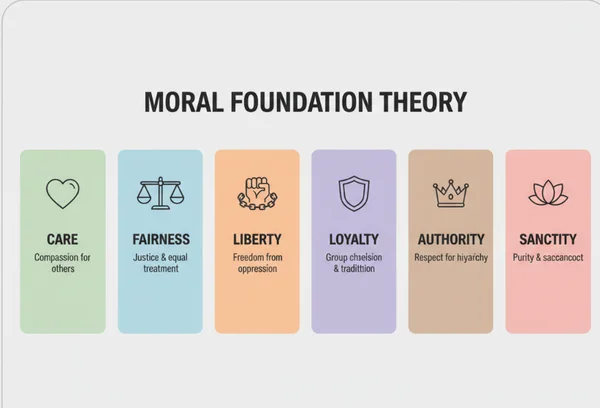
Research reveals stark contrasts: Western industrialized nations prioritize Care and Fairness. Meanwhile, Eastern and Southern cultures often emphasize Loyalty, Authority, and Sanctity equally or more strongly. By taking a moral foundations test, you can see which of these pillars drives your personal decision-making.
Universal Morality vs. Ethical Relativism
The debate between universalism and relativism is a cornerstone of cross-cultural ethics. Universalists believe that certain moral truths apply to all humans, regardless of culture. For example, almost every society agrees that killing innocent people is wrong. This suggests there is a shared "human nature" at the core of our ethics.
On the other hand, ethical relativism argues that morality is strictly a social construct. In this view, no culture's ethics are "better" or "worse" than another’s. They are simply different. Relativists point to historical changes in what is considered moral. They look at evolving views on animal rights or gender roles to show that ethics are constantly shifting. Understanding this balance helps you appreciate the diversity of the human experience without losing your own sense of integrity.
Global Morality Differences: East vs. West
While every individual is unique, broad patterns often emerge when comparing different regions. The most frequently studied comparison is between "Western" societies (like the US and Europe) and "Eastern" societies (like China, Japan, and India).
Individualism vs. Collectivism in Moral Decision-Making
The most significant driver of global morality differences is the tension between individualism and collectivism. In individualistic cultures, the primary goal is to protect the rights and happiness of the individual. "Doing what is right for you" is often seen as a moral virtue.
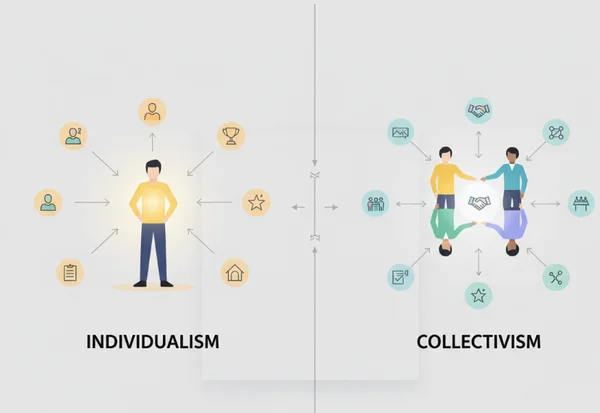
In collectivist cultures, the moral priority is the harmony of the group. This could mean the family, the company, or the nation. In these societies, an action is often judged by how it affects others rather than how it benefits the self. For instance, a person might choose a career path based on their parents' wishes to show respect. This reflects the Authority and Loyalty pillars. An individualist would prioritize personal passion, reflecting Liberty. Both are "moral" choices, but they stem from different cultural foundations.
Real-World Scenarios: Cultural Context in Action
Let’s look at a practical example: Whistleblowing in the workplace.
Cultures prizing individual fairness often lionize whistleblowing. Protecting the company and upholding justice aligns with their core values. However, in a culture that values group loyalty and respect for authority, that same act might be seen as a betrayal. The "whistleblower" might be viewed as someone who disrupted the social fabric of the team.
Another scenario involves social obligations. In some cultures, it is a moral requirement to help a distant relative with money or a job. This holds true even if they aren't the best candidate. In other cultures, this is viewed as "nepotism" or "corruption." Understanding these nuances prevents us from judging others too quickly. It allows us to see that what looks like a "wrong" choice is often a choice based on a different set of deeply held cultural moral values.
A Practical Guide to Multicultural Decision-Making
As the world becomes more integrated, we often face "cultural ethical dilemmas." Whether you are a business leader, a student, or a traveler, you need a strategy. You must handle these moments with grace and intelligence.
Steps to Navigate Cultural Ethical Dilemmas
When you encounter a moral disagreement that feels cultural, follow these three steps:
- Identify the Conflict: Ask yourself, "Which moral pillar is being prioritized here?" Is the person acting out of Loyalty while I am acting out of Fairness?
- Contextualize the Action: Try to understand the history or social structure behind the value. For example, if someone is very focused on Authority, consider if their society relies on social hierarchy for stability.
- Find the Common Ground: Most cultures share a desire for safety, prosperity, and respect. Frame your discussion around these shared goals. Do not focus solely on the specific "rule" being broken.
By using this approach, you can bridge the gap between different perspectives without compromising your core values.
Assessing Your Own Cultural Bias
We all like to think our morals are "common sense." However, the truth is that our upbringing heavily biases our judgment. We often view our own culture’s values as "objective." Conversely, we see other cultures' values as "weird" or "backwards." This is called ethnocentrism.

To grow as a person, you must be willing to look in the mirror. You can see your results and compare them to global averages. This helps you see where your biases might lie. Are you more individualistic than you thought? Do you value tradition more than the average person in your country? Knowing these answers is the first step toward becoming a truly global citizen.
Key Takeaways: Discovering Your Ethical Core in a Globalized World
As we navigate an interconnected world, culture acts as a lens—but not a blindfold—for ethical decision-making. By understanding Moral Foundation Theory and the differences between individualism and collectivism, we can move from judgment to empathy.
Morality evolves through our daily interactions, reflecting shared struggles rather than rigid rules. Whether you are looking to improve your leadership skills or simply want to understand yourself better, exploring your ethical core is a rewarding journey.
Are you ready to find out what truly drives your decisions? Don't leave it to guesswork. Start your free moral test today. By receiving a personalized AI-driven report, you can unlock deep insights into your values. You will learn how to navigate the complex world of global ethics with confidence.
FAQ Section
What are the 5 moral values most common globally?
Researchers debate specifics, but global moral values typically include five pillars: Care, Fairness, Loyalty, Authority, and Sanctity. Most people around the world agree that we should avoid hurting others. They also agree that people should be treated with some level of justice. However, how much weight each culture gives to these values varies significantly.
How do I figure out my morals and values?
The best way to identify your values is through self-reflection and standardized assessment. You can take a moral assessment test that presents you with difficult scenarios. By analyzing your choices in these scenarios, you can see which ethical frameworks you naturally prefer. This includes systems like utilitarianism or deontology.
Is empathy a core value in all cultures?
Yes, empathy is considered a near-universal human trait. It is the ability to understand and share the feelings of another. It forms the basis of the "Care" foundation. The expression of empathy might look different. Some cultures express it through direct words, while others use quiet service. Regardless, the underlying drive to reduce suffering is found in every major society.
What is the difference between ethics and morals?
While the words are often used interchangeably, there is a subtle difference. Morals usually refer to personal beliefs about right and wrong. These are often shaped by religion or upbringing. Ethics refers to a more formal system of rules or "codes of conduct" provided by an external source. This might be a professional organization or a legal system. For example, a lawyer's personal morals might tell them a client is guilty. However, their professional ethics require them to provide the best possible defense.