D&D Alignment Explained: The 9 Alignments and Moral Values
For decades, the alignment dnd system has been more than just a character-creation shortcut. It’s a simple framework for thinking about motivation, values, and the choices a character tends to make in a fantasy world. In this guide, you’ll learn how the two alignment axes work, how the nine alignments differ, and why the chart is still useful for roleplaying.
If you also enjoy reflecting on real-life decision-making (without treating any label as a verdict), you can optionally explore an educational moral test for self-reflection alongside the ideas in this article.
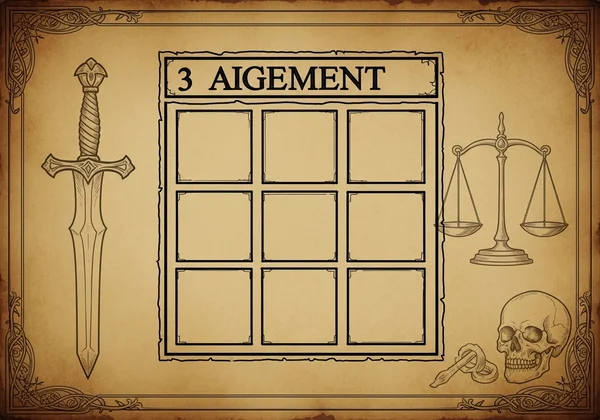
What Is D&D Alignment and How Does It Work?
At its core, D&D alignment is a shorthand for a character’s ethical and moral perspective. Think of it as a compass that can guide motivations, decisions, and worldview in play. It isn’t a rigid rulebook. It’s a roleplaying tool.
The classic alignment grid is built on two independent axes. When you combine them, you get nine broad moral outlooks. Understanding the two axes first makes the rest of the chart much easier to use at the table.
The Good vs. Evil Axis: A Spectrum of Altruism
This axis describes a character’s attitude toward others.
Good characters tend to protect others, value life, and accept personal cost to help. Evil characters tend to exploit, oppress, or harm others for personal gain. Neutral characters fall somewhere in between, often driven by practicality, loyalty to a smaller group, or a reluctance to commit to either extreme.
The Law vs. Chaos Axis: A Spectrum of Order
This axis describes a character’s relationship with rules and social structure.
Lawful characters tend to value order, tradition, and codes of conduct. Chaotic characters tend to prioritize freedom, conscience, and individual choice over institutions. Neutral characters on this axis typically see tradeoffs on both sides and choose based on context.
The 9 D&D Alignments Chart: A Visual Guide
The most common way to visualize alignment is a grid. Law vs. Chaos usually runs horizontally, while Good vs. Evil runs vertically. Their intersections create the nine classic alignments.
This chart makes it easier to see why two characters can share a goal but disagree strongly on methods. A Lawful Good character and a Chaotic Good character may both want to help people, yet clash over whether rules are a safeguard or an obstacle. Likewise, a Lawful Good and a Lawful Evil character may both believe in order, but for completely different moral ends.
| Lawful | Neutral | Chaotic | |
|---|---|---|---|
| Good | Lawful Good | Neutral Good | Chaotic Good |
| Neutral | Lawful Neutral | True Neutral | Chaotic Neutral |
| Evil | Lawful Evil | Neutral Evil | Chaotic Evil |
This table mirrors the classic D&D alignment grid. Use it as a quick lookup while you read the deeper explanations below.
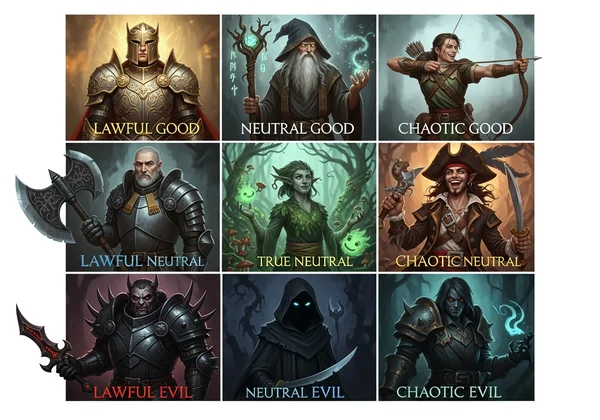
The Good Alignments: Lawful Good, Neutral Good, Chaotic Good
These alignments generally prioritize helping others or reducing harm, even if they disagree on how to do it.
Lawful Good: The Principled Crusader (e.g., Captain America)
A Lawful Good character acts as a good person is expected or required to act. They combine a commitment to oppose evil with the discipline to fight relentlessly. They believe in order, truth, and justice, and they often work within the system to make things better.
Neutral Good: The Benevolent Helper (e.g., Gandalf)
A Neutral Good character does the best that a good person can do. They are devoted to helping others and work for the greater good without a strong bias for or against order. They may work with a king one day and a band of rebels the next, as long as the cause is just.
Chaotic Good: The Rebel with a Cause (e.g., Robin Hood)
A Chaotic Good character follows their conscience, even when it conflicts with rules or expectations. They have kind intentions, but they may see established laws as barriers to justice. They often fight tyranny and champion the underdog, trusting personal judgment over institutions.
The Neutral Alignments: Lawful Neutral, True Neutral, Chaotic Neutral
Neutral alignments are often about priorities and boundaries rather than a “middle-of-the-road” personality.
Lawful Neutral: The Impartial Judge (e.g., Judge Dredd)
A Lawful Neutral character acts as law, tradition, or a personal code directs them. Order and organization are paramount. They may believe in personal discipline, or in order for all through strong institutions, treating order as a core value independent of moral outcomes.
True Neutral: The Seeker of Balance (e.g., The Ents)
A True Neutral character does what seems like a good idea in the moment and doesn’t feel strongly pulled toward either extreme. Many True Neutral characters show low conviction or low bias rather than an active commitment to neutrality.
In other cases, neutrality can be a deliberate choice: staying focused on balance, stability, or a mission that doesn’t map neatly onto “good” or “evil.”
Chaotic Neutral: The Free Spirit (e.g., Jack Sparrow)
A Chaotic Neutral character follows their whims and values personal liberty above all else. They resist authority, resent restrictions, and challenge traditions, but they don’t necessarily commit to protecting others’ freedom. It’s less “anarchy as a cause” and more “freedom as a personal priority.”
The Evil Alignments: Lawful Evil, Neutral Evil, Chaotic Evil
These alignments generally place self-interest, control, or harm above empathy—though the style and motivation can vary a lot.
Lawful Evil: The Tyrant with a Code (e.g., Darth Vader)
A Lawful Evil character methodically takes what they want within the limits of a code or hierarchy. They care about tradition, loyalty, and order, but not about freedom, dignity, or life. They may follow rules, but without mercy or compassion.
Neutral Evil: The Opportunistic Malevolent (e.g., Lord Voldemort)
A Neutral Evil character is out for what they can get. They are purely selfish and will harm others if it benefits them. They don’t need a strict system to justify their actions, and they aren’t driven by chaos for its own sake. They prioritize gain.
Chaotic Evil: The Agent of Destruction (e.g., The Joker)
A Chaotic Evil character does whatever greed, hatred, or the urge to destroy pushes them to do. They are unpredictable and violent, rejecting limits and restraint. Where Neutral Evil can be calculating, Chaotic Evil is often about unleashing harm with few brakes.
Beyond the Game: How Alignments Mirror Moral Philosophies
Although D&D alignment is a fantasy tool, it can resemble real ethical frameworks in simplified form. That resemblance is part of why people enjoy discussing alignment—it gives a shared vocabulary for complicated moral tradeoffs.
The Lawful Path and Deontology
Lawful alignments often resemble duty-based thinking: the idea that some actions are right or wrong because they follow (or violate) a rule, principle, or obligation. A Lawful Good character, for example, may value following a code because keeping promises and respecting institutions is part of what “good” means to them.
The Good Path and Consequentialism
Good alignments can resemble outcome-focused thinking: the idea that results matter most when judging an action. A Chaotic Good character might break a rule to prevent harm, believing the outcome justifies the method.
The Chaotic Path and Individualism
Chaotic alignments often emphasize conscience, freedom, and personal responsibility. They can resonate with more individual-centered perspectives where autonomy matters more than social order, especially when institutions feel unjust or restrictive.
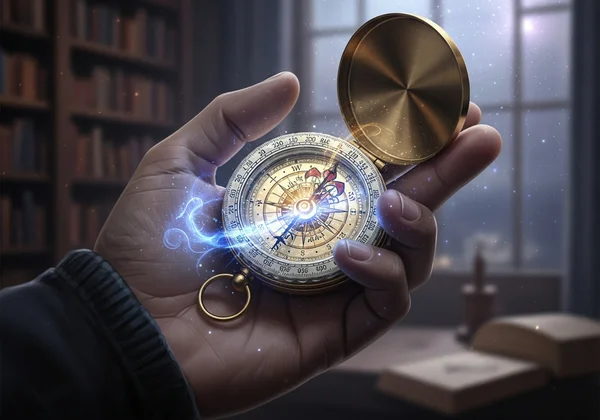
From Fantasy to Reality: Exploring Your Own Moral Compass
After learning the D&D alignment chart, it’s natural to wonder where you might land on a similar grid. The chart can be a useful prompt, but real life is more nuanced than nine boxes.
Why a Simple Label Isn’t Enough
In everyday situations, moral decisions can shift with context, culture, relationships, and pressure. You might act “lawfully” at work by following policy, but “chaotically” at home by prioritizing creativity and personal choice. A single label rarely captures the full picture of how someone reasons.
A Gentle Self-Reflection Option
If you’re curious about the values that guide your decisions, you can optionally try an educational tool like this ethical compass tool. It’s meant to support reflection and discussion—not to judge you, diagnose you, or claim a final answer about who you are.
A Quick Reflection Checklist
If you’d rather reflect without any tool, start here:
- Think of a recent tough choice and write down what mattered most (fairness, loyalty, safety, freedom, etc.).
- Ask whether you cared more about rules/process or outcomes in that moment.
- Notice what you protected (people, principles, reputation, stability).
- Consider what would have changed your mind (new facts, different stakes, someone else’s needs).
- Try describing your reasoning in one sentence—then see if it still feels accurate a day later.
Conclusion: Using D&D Alignment as a Thinking Tool
In practical terms, alignment dnd is a two-axis framework that helps you describe how a character relates to rules (law vs. chaos) and to others (good vs. evil). Used lightly, it can make roleplaying clearer and more consistent—without turning your character into a stereotype.
If you want an extra prompt for personal reflection, you can also explore the moral test as a companion exercise. Either way, the most useful takeaway is simple: alignments are starting points for thinking, not boxes that define everything you do.
Frequently Asked Questions About D&D Alignment
Can a character’s alignment change?
Yes. Alignment is usually best treated as descriptive rather than prescriptive. If a character consistently acts against their stated alignment, many Dungeon Masters will treat that as growth (or decline) and adjust the alignment over time. In play, it can help to track patterns: what the character does repeatedly, not what they do once under extreme pressure.
What is the rarest alignment in D&D?
This varies widely by table and campaign tone. That said, True Neutral and Lawful Neutral are often described as less common because many players enjoy strong moral stances or dramatic arcs, which can pull characters toward clearer “good” or “evil” commitments. It’s also possible that neutrality shows up often, but players describe it differently depending on the story.
Does alignment restrict what my character can do?
Alignment should be a guide, not a straitjacket. A Lawful Good character can still lie to protect someone, and a Chaotic Good character can still follow rules they respect. What matters most is the overall pattern: the character’s values, their typical tradeoffs, and how they justify choices across time.
What’s the difference between Neutral Evil and Chaotic Evil?
A helpful way to separate them is motivation and style. Neutral Evil tends to be driven by selfish gain and willingness to harm when it’s useful. Chaotic Evil tends to be driven by destruction, cruelty, or impulse, with fewer boundaries and less interest in stability. Both can be dangerous in a story, but they often create very different kinds of conflict at the table.
Is True Neutral just being indecisive?
Not necessarily. It can represent apathy or low conviction in some characters, but it can also represent a deliberate commitment to balance or non-interference. For example, a character might avoid taking sides because their mission is to protect nature, preserve stability, or prevent extremes from dominating—rather than because they can’t decide.