Alignment Chart Examples: How to Read and Use the 9 Moral Alignments
Alignment chart examples are popular because they turn a fuzzy question into a simple map: is this character, choice, habit, or idea more lawful or chaotic, more good or evil? The format began in tabletop role-playing, but people now use it for memes, team debates, classroom prompts, and quick character planning. A good chart is not a final moral verdict. It is a conversation tool. If you enjoy comparing playful categories with deeper value reflection, moral self-reflection tools can help you think beyond the nine squares and ask why certain choices feel right, fair, loyal, or principled to you.
What an Alignment Chart Is Really Showing
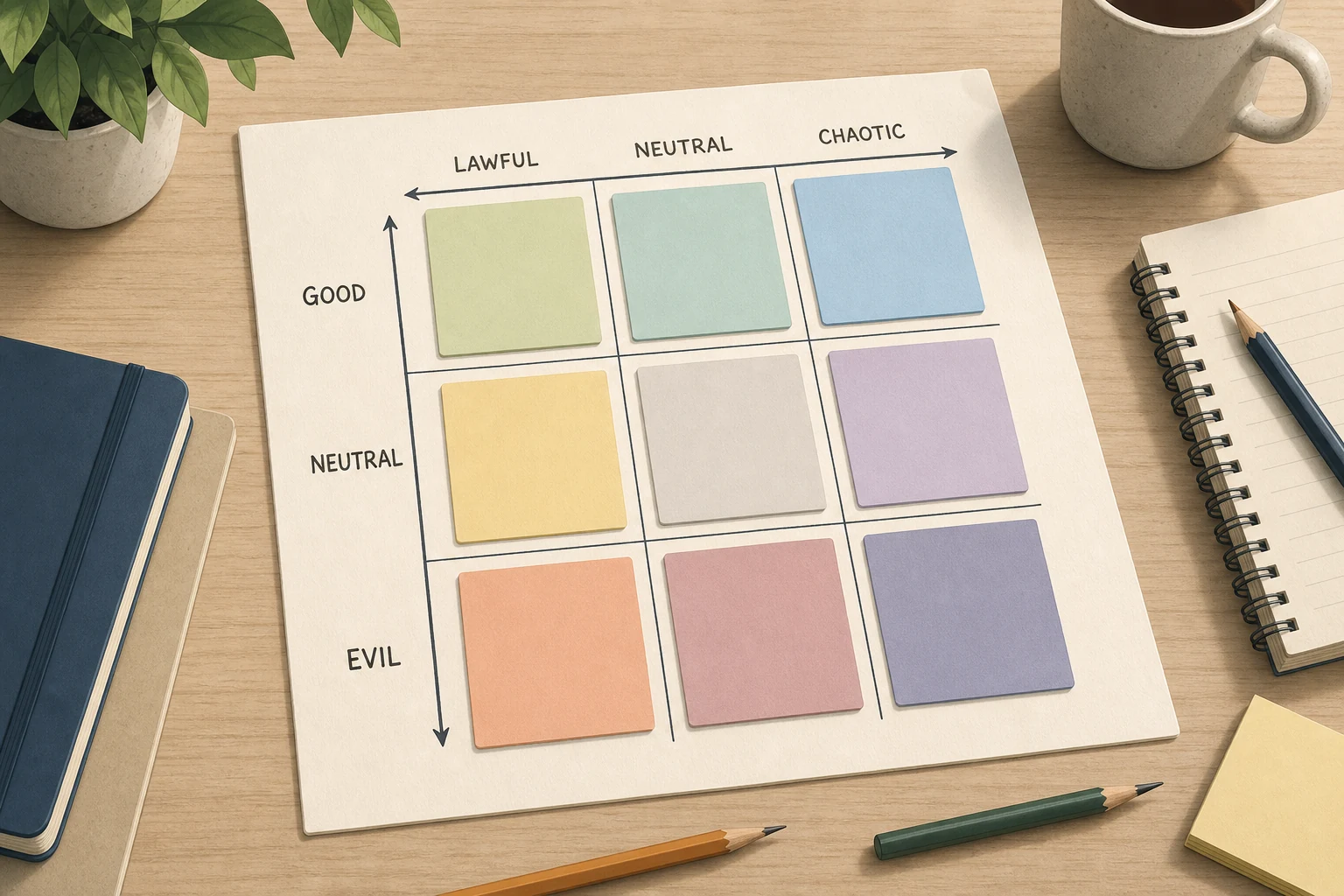
An alignment chart is a 3x3 grid built from two axes. One axis usually describes order: lawful, neutral, and chaotic. The other describes moral orientation: good, neutral, and evil. When the axes cross, they create nine alignments: lawful good, neutral good, chaotic good, lawful neutral, true neutral, chaotic neutral, lawful evil, neutral evil, and chaotic evil.
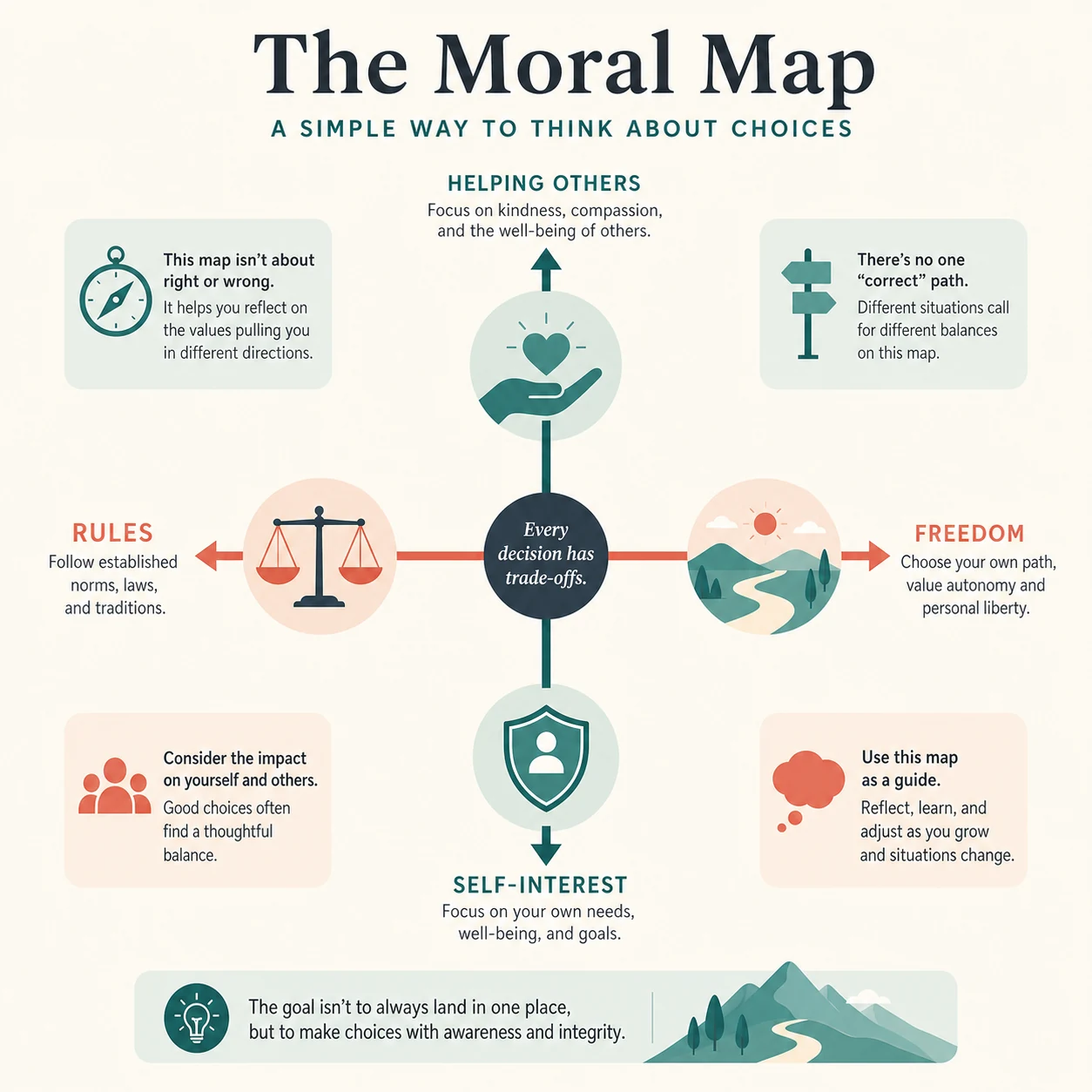
The chart works because each square combines two questions. First, how does the person or character relate to rules, systems, promises, codes, and authority? Second, whose interests do they prioritize when there is conflict: others, balance, or themselves? Those questions are simple enough for a game night, but flexible enough for a thoughtful discussion.
The biggest mistake is reading the chart as a moral scoreboard. "Good" does not mean flawless, "evil" does not mean cartoonish at every moment, and "lawful" does not simply mean obeying government law. In many alignment chart examples, lawful means guided by a code. Chaotic means resistant to fixed rules. Neutral often means selective, balanced, undecided, or situational, depending on the topic.
The Two Axes Explained With Everyday Examples
The lawful-chaotic axis is about structure. A lawful person, character, or strategy tends to respect a system, whether that system is a public law, a personal vow, a professional standard, a religious rule, or a private code. A chaotic example tends to trust freedom, instinct, improvisation, or disruption more than stable rules.
The good-evil axis is about moral priority. A good example usually tries to protect others, reduce harm, or serve a shared good. An evil example pursues self-interest, control, revenge, or advantage even when others are harmed. Neutral examples sit between those poles. They may seek balance, avoid taking sides, follow practical needs, or shift depending on the situation.
Here is a quick everyday way to explain it:
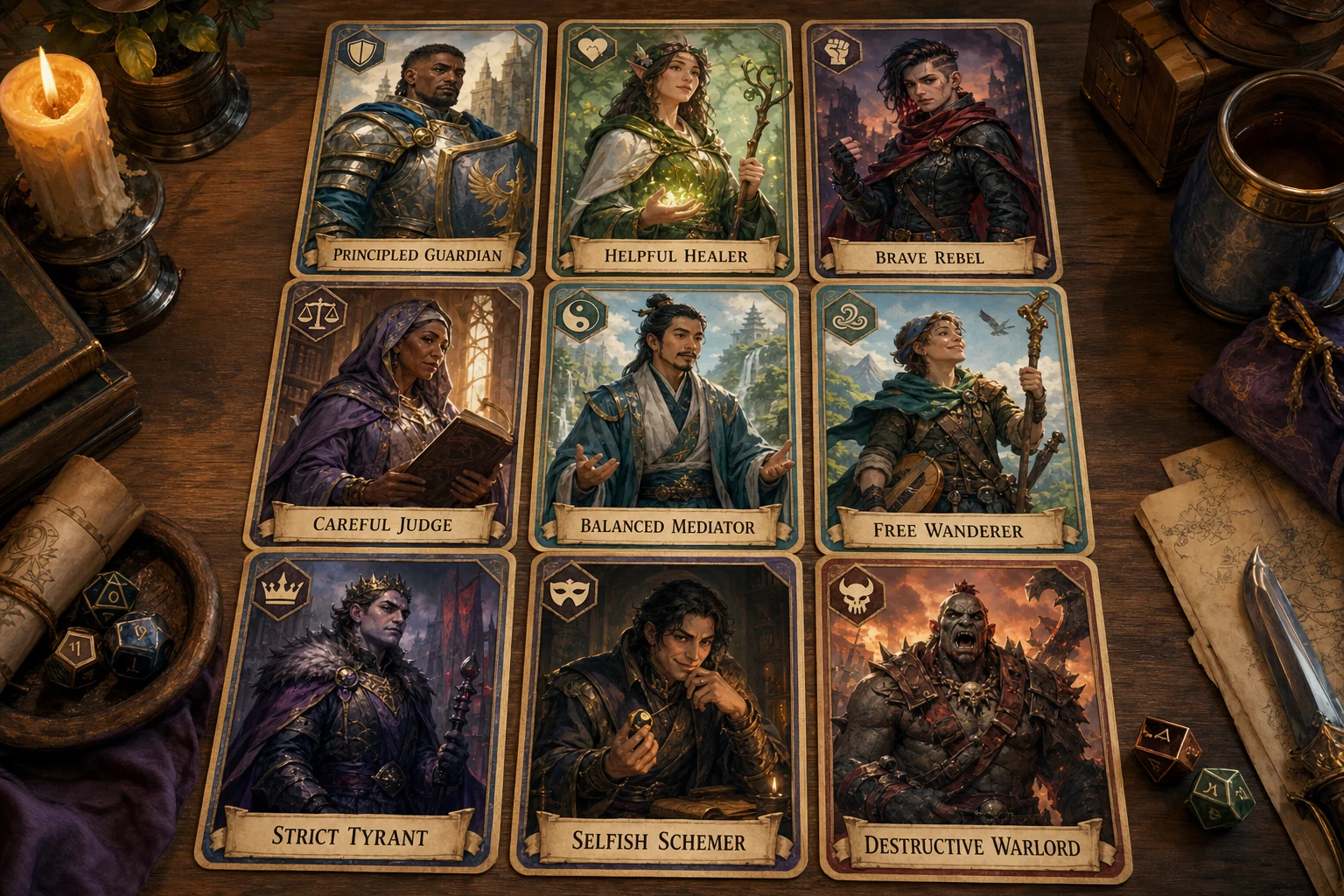
- Lawful good: follows a rule because the rule protects people.
- Neutral good: helps people, even if the rulebook is not central.
- Chaotic good: breaks a bad rule to help people.
- Lawful neutral: follows a code because order itself matters.
- True neutral: avoids extremes and responds case by case.
- Chaotic neutral: prizes freedom and resists being boxed in.
- Lawful evil: uses systems, hierarchy, or rules for selfish ends.
- Neutral evil: pursues self-interest without much concern for order.
- Chaotic evil: harms or dominates without respect for rules or restraint.
This is why two characters can both be "good" but feel completely different. A lawful good paladin and a chaotic good rebel may share a desire to protect others, yet clash over methods. That tension is exactly what makes the grid useful.
9 Moral Alignments Explained With Examples
Lawful Good
Lawful good combines principle with care for others. This character keeps promises, respects fair procedures, and believes order can serve justice. A lawful good example might be a community leader who refuses a shortcut because the process protects vulnerable people. In fiction, this square often fits honorable protectors, principled heroes, and reformers who want the system to work as it should.
Neutral Good
Neutral good focuses on helpful outcomes more than rule loyalty. A neutral good character asks, "What would reduce harm or help people most in this situation?" They may obey rules when the rules are useful, but they are not defined by them. A volunteer doctor crossing a technical boundary to help after a disaster can be a neutral good example, as long as the motive is care rather than ego.
Chaotic Good
Chaotic good is the rebel with a conscience. This example breaks, bends, or ignores rules when those rules block a humane result. The classic example is a folk hero who steals from a corrupt ruler to feed people. The risk is impulsiveness. The strength is moral courage when institutions fail.
Lawful Neutral
Lawful neutral values order, consistency, duty, or procedure without necessarily aiming for a heroic outcome. A judge who applies the written standard even when the result feels emotionally uncomfortable can fit this square. So can a guard, clerk, or mentor who believes the code matters because chaos would be worse.
True Neutral
True neutral is the center of the chart. It can mean balance, caution, self-preservation, or a refusal to turn every situation into a grand moral cause. A true neutral example might be a mediator who tries to keep both sides from escalating, or a character at the start of a growth arc who has not yet chosen a guiding value.
Chaotic Neutral
Chaotic neutral values independence. This character dislikes being controlled and may act unpredictably, but that does not automatically make them cruel. A wandering trickster, restless inventor, or anti-authority traveler may fit here. The important question is whether their freedom-seeking behavior regularly helps others, harms others, or mostly serves personal movement.
Lawful Evil
Lawful evil uses rules, hierarchy, contracts, or institutions for harmful ends. This square is not random cruelty. It is organized self-interest. A corrupt executive who weaponizes policy to silence dissent is a clear lawful evil example. The person may look polished and orderly while using order to protect power.
Neutral Evil
Neutral evil is self-interest without strong loyalty to law or chaos. This example will use rules when convenient and ignore them when they get in the way. A mercenary who sells out allies for profit, or a rival who lies only because it works, may fit this square. The pattern is not ideology. It is advantage.
Chaotic Evil
Chaotic evil rejects restraint and harms others through domination, spite, or destructive appetite. In stories, this square often belongs to villains who destabilize every room they enter. In a thoughtful chart, use this label carefully. It works best for fictional extremes or exaggerated meme categories, not casual judgments about real people.
Good Alignment Chart Examples for Different Uses
For character writing, choose a conflict that reveals the alignment. Put a lawful good knight, a neutral good healer, and a chaotic good outlaw in the same rescue mission. They may all want to save someone, but one trusts the chain of command, one focuses on the victim, and one breaks into the prison tonight.
For a DnD alignment chart, start with motives, not stereotypes. A lawful neutral character is not automatically boring. A chaotic neutral character is not automatically random. Ask what rule, freedom, duty, fear, wound, or hope drives the character. The answer gives the alignment texture.
For workplace or classroom discussion, choose a harmless topic first. Chart study habits, meeting styles, fictional leadership types, or project priorities. A "lawful good meeting" might have an agenda and genuine care for everyone's time. A "chaotic good brainstorm" might ignore the agenda but uncover the best idea. This keeps the chart fun while teaching people to separate values from behavior.
For personal reflection, avoid putting yourself permanently in one square. Instead, compare situations. You might act lawful good when fairness procedures matter, neutral good when a friend needs help, and chaotic good when a rule seems unfair. That kind of pattern is more useful than one fixed label. A broader ethical reflection platform can support that deeper question: what values tend to guide your decisions across different settings?
How to Create an Alignment Chart
First, define the topic. The classic chart maps moral and rule orientation, but the same format can compare almost anything with two meaningful axes. If your topic is character alignment, keep the traditional lawful-chaotic and good-evil axes. If your topic is product ideas, classroom behaviors, or team rituals, rename the axes so they fit the discussion.
Second, define each axis before placing examples. Write one sentence for each end of the scale. For example, lawful could mean "guided by a stable code," while chaotic could mean "guided by freedom and improvisation." Good could mean "prioritizes others' well-being," while evil could mean "prioritizes self-interest despite harm." Clear definitions prevent the chart from turning into vibes alone.
Third, pick examples with evidence. Do not place a character in chaotic good only because they are funny, or lawful evil only because they wear black. Look for repeated choices. What do they do under pressure? What do they sacrifice? What rules do they keep, and which ones do they break?
Fourth, leave room for disagreement. The best alignment chart examples invite debate because different people notice different evidence. If your group disagrees, ask for scenes, choices, or patterns that support each placement. The disagreement is often the learning moment.
Fifth, revise the chart when the story changes. Characters grow. Teams change. People act differently across contexts. A chart is a snapshot, not a permanent identity card.
Character Alignment Chart Template
Use this simple template when you need a fast character alignment chart:
- Name the character or example.
- List three repeated choices they make.
- Ask what they respect more: rules, balance, or freedom.
- Ask what they protect more: others, balance, or themselves.
- Choose the square that best explains both pattern and motive.
- Add one sentence explaining your evidence.
For example, imagine a spy who obeys a strict agency code, refuses personal corruption, and protects civilians even when the mission becomes harder. That points toward lawful good. Now imagine a second spy who obeys the same code but will sacrifice innocent people to preserve the institution. That points toward lawful evil. Same structure, different moral priority.
If you are using a chart maker or blank template, keep labels short and make the evidence notes longer than the labels. The label tells readers where you placed the example. The note tells them why.

Common Mistakes When Reading Alignment Chart Examples
The first mistake is treating alignment as destiny. A character can surprise you without becoming inconsistent. The useful question is whether the surprise reveals a deeper value or breaks the pattern completely.
The second mistake is confusing lawful with legal. A lawful character may reject a corrupt law because their higher code matters more. A chaotic character may obey a law when it happens to match their goals.
The third mistake is flattening neutral into "does nothing." Neutral can mean balance, practicality, uncertainty, moderation, self-protection, or independence from both extremes. True neutral can be especially interesting when a character is changing.
The fourth mistake is using the chart to judge real people too quickly. Alignment language is playful and broad. It is better for fictional characters, choices, habits, and discussion prompts than for labeling someone's whole moral worth.

Using Alignment Charts for Better Moral Reflection
The best alignment chart examples do more than sort characters into nine boxes. They make motives visible. They show how a person can care about a good outcome but disagree about rules, or respect order while using it for questionable ends. They also remind us that labels are only the start of an ethical conversation.
If you want to move from a playful chart toward a fuller understanding of values, ask three follow-up questions. What value is being protected? What tradeoff is being accepted? What would change the person's mind? Those questions connect alignment to real moral reflection without pretending the chart can measure someone's character with precision.
That is also where a moral foundations lens can be useful. Instead of asking only whether a choice is lawful, chaotic, good, or evil, you can ask whether it reflects care, fairness, loyalty, authority, liberty, or other moral priorities. To explore those patterns in a more structured way, you can reflect on your moral compass as an educational self-discovery exercise, not as a final judgment.
FAQ
What does a good alignment chart look like?
A good alignment chart has clear axes, nine labeled squares, and examples that are supported by evidence. It should be easy to scan, but the best versions also include short notes explaining why each example belongs in its square.
How do you explain the alignment chart?
Explain it as two questions crossing each other. The lawful-chaotic axis asks how strongly someone follows rules, codes, or systems. The good-evil axis asks whether they prioritize others, balance, or self-interest when choices have moral consequences.
How do you create an alignment chart?
Choose a topic, define the two axes, gather examples, place each example based on repeated behavior, and add a short reason for each placement. If people disagree, use the disagreement to clarify the definitions.
What are the 9 moral alignments?
The nine moral alignments are lawful good, neutral good, chaotic good, lawful neutral, true neutral, chaotic neutral, lawful evil, neutral evil, and chaotic evil. Each one combines a rule orientation with a moral priority.
Is a DnD alignment chart the same as a personality test?
No. A DnD alignment chart is mainly a storytelling and role-playing tool. It can inspire reflection, but it should not be treated as a precise personality assessment or a complete measure of someone's values.
Can a character's alignment change?
Yes. Alignment can change when a character grows, faces pressure, questions old beliefs, or makes repeated choices that reveal a new pattern. Many stories become more interesting when alignment shifts gradually.
Why do people disagree about alignment chart examples?
People weigh evidence differently. One reader may focus on intention, another on consequences, and another on loyalty to rules. That is why alignment charts work well as discussion tools: they reveal the values behind the placement.